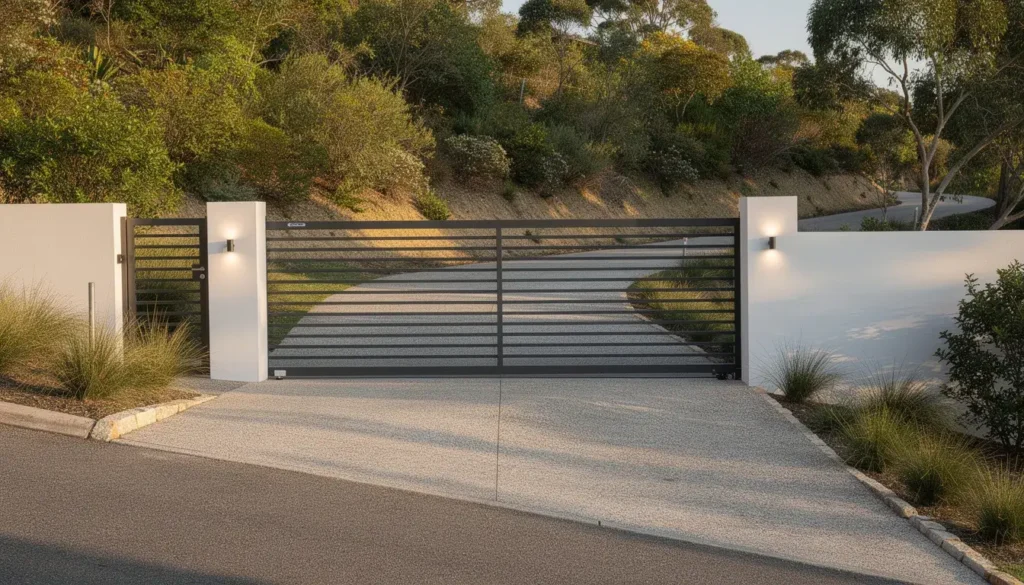
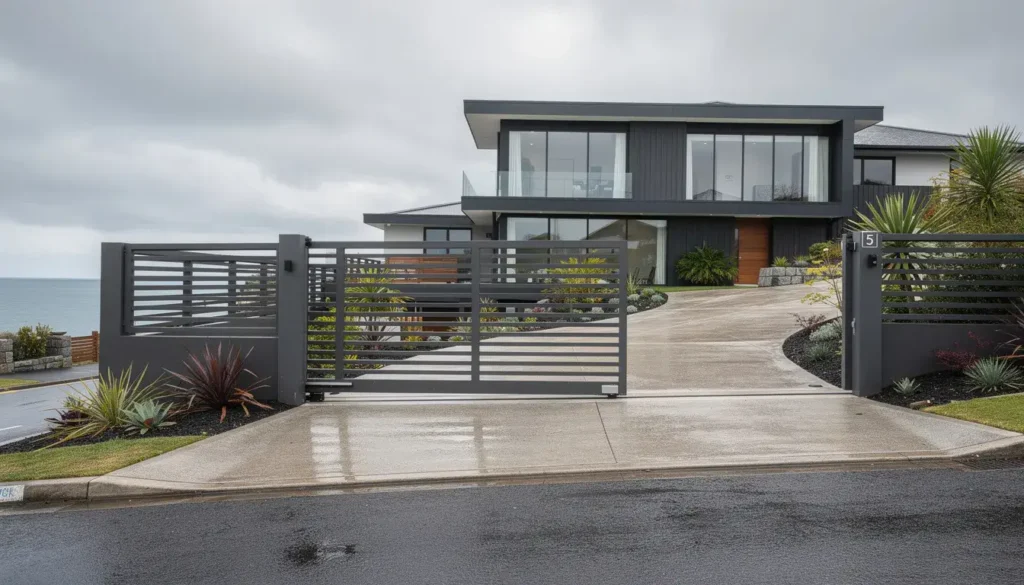
Welcome to our comprehensive guide on electric gate cost in Wellington! Whether you’re considering installing a new automated gate for your driveway or upgrading an existing gate, you’ve come to the right place. Our expert insights will help you understand the factors influencing costs, explore different gate options, and make informed decisions tailored to your property’s unique needs. Discover how to enhance your property’s security, convenience, and curb appeal with the perfect electric gate solution designed for the Wellington region.
Table of Contents
Key Takeaways
- Most residential electric gates in Wellington cost between $7,500 and $18,000 in 2026 for a fully installed, automated driveway gate.
- Basic automation on an existing sliding gate can start from around $5,000, while complex, sloping sites or long driveways can push projects over $20,000.
- The biggest cost drivers in Wellington are site conditions (slopes, access), trenching for power, and the choice between swing vs sliding gates.
- Ongoing costs include servicing every 12–24 months and electricity usage, which is typically low compared with the upfront investment.
- Get a site-specific quote because Wellington’s hills, wind exposure, and access constraints make “average” prices only a rough guide.
Overview: How Much Do Electric Gates Cost in Wellington?
If you’re searching for electric gate cost Wellington figures, here’s the straightforward answer: expect to pay between $7,500 and $18,000 for a fully installed automated driveway gate at a typical residential property in 2026. That range covers most suburban homes across the Wellington region, from Porirua to Lower Hutt.
The actual number depends heavily on your specific site. A basic residential sliding electric gate starts from approximately $7,500 fully installed on a straightforward driveway. Most Wellington driveway gate projects land somewhere in the $9,000–$15,000 range once you factor in power runs, civil works, and a quality gate motor. High-spec or difficult sites—think steep hillside properties or custom architectural designs—push costs to $18,000–$25,000 or more. Commercial properties and high-usage automatic gates for apartment blocks or business premises commonly range from $20,000 to $50,000.
These figures assume a standard suburban driveway in areas like Karori, Johnsonville, Lower Hutt, or Porirua, with mains power within about 20–30 metres of the gate location. Costs climb when the driveway is steep (common in Brooklyn, Wadestown, Kelburn), when access is tight for machinery, or when new concrete posts and foundations are required.
What Affects Electric Gate Cost in Wellington?
Wellington’s geography, climate, and power access make gate costs different from other New Zealand regions like Auckland or Canterbury. The capital’s famous hills, strong winds, and older infrastructure all factor into what you’ll pay.
The key cost drivers include:
| Factor | Impact on Cost |
|---|---|
| Site conditions (slope, wind, soil) | High – can add $2,000–$8,000 |
| Gate type (swing vs sliding) | Moderate – affects civil works and motor costs |
| Materials (timber, aluminium, steel) | Moderate – affects durability and maintenance |
| Power access and trenching distance | High – long runs add thousands |
| Design complexity and gate size | Moderate to High – custom work costs more |
A flat, wide driveway in Petone with power nearby might cost $9,000 for a complete installation. The same gate specification on a steep, tight driveway in Kelburn could easily reach $18,000 or more due to extra engineering, reinforced posts, and difficult access.
An on-site assessment in Wellington often reveals hidden costs like retaining work, drainage improvements, or reinforcing posts to handle heavy winds and soft or reclaimed ground.
Power Access and Trenching
Most Wellington electric gates run on 230V mains power, with low voltage power (24V) feeds used over short runs up to roughly 30 metres. The 24V automation systems, like the popular Boxer 500 Slider kit, operate smoothly without straining your household power supply and work well for most residential properties.
Trenching from the house switchboard to the gate can cost anywhere from a few hundred dollars on a short, flat run to several thousand dollars on long, steep, or paved driveways. The trench typically needs to be around 600mm deep to meet NZ electrical standards.
In built-up suburbs like Newtown or Te Aro, existing services (fibre, water, gas) under the driveway can complicate trenching and increase labour time. Your installer will need to locate services before digging, which sometimes means hand-digging around obstacles.
Solar power options exist but have limitations in Wellington. The city’s variable winter sun and frequent cloud cover can limit reliability for busy households needing frequent gate operation. Solar setups work best for low-use scenarios—if your gate operates many times daily, a hybrid system with battery backup makes more sense. All 230V work requires a registered electrician for both safety and compliance certificates.
Design Complexity and Gate Size
Simple, solid-panel aluminium or steel gates with horizontal slats are usually the most cost-effective option for automated driveways in Wellington. These designs are straightforward to fabricate and install, keeping installation costs manageable.
Custom laser-cut panels, curved tops, and mixed-material designs (timber and steel, glass infills) add design and fabrication time. The cost impact is real: upgrading from a basic design to a fully customised architecturally designed gate can add $2,000–$6,000 to the total.
A standard 3–3.5 m wide driveway gate costs less than a heavy duty 4.5–5 m wide gate needed for shared driveways or truck access in semi-rural areas like Upper Hutt and rural Whitby. Heavier or larger gates require bigger motors, stronger posts, and deeper foundations—all of which increase costs.
Wellington Site Conditions: Slope, Wind, and Access
Many Wellington suburbs are built on hillsides, so sloping driveways are common and significantly affect gate engineering and installation price.
Swing gates on an uphill driveway may need special articulated arms, offset hinges, or lift-and-swing hardware. These specialised fittings cost more than standard setups and require experienced installation for smooth operation.
Wellington’s strong northerly and southerly winds—sometimes exceeding 150km/h—require robust posts, extra bracing, and careful consideration of solid vs slatted gate designs. A solid gate panel catches wind like a sail, putting enormous stress on the motor and hinges. Slatted or louvre designs reduce wind loading significantly.
Limited street parking and narrow streets in older suburbs (Mount Cook, Thorndon) can increase labour time because equipment and materials must be carried in by hand. Installers can’t always park a truck next to your gate line.
Example comparison:
- Flat, wide driveway in Lower Hutt: $9,000–$11,000
- Steep, tight driveway in Kelburn: $16,000–$20,000+
Gate Type: Swing vs Sliding in Wellington
Sliding gates are often preferred on sloping or short driveways in Wellington because they avoid the issue of gates swinging into steep driveways or out over the road. A sliding gate glides parallel to your fence line, needing only a straight run of track or rail.
However, sliding gates typically require a concrete strip or track, which adds around $1,000–$3,000 in civil works depending on length and ground conditions. The track needs to be level and smooth—any variations cause motor strain and premature wear.
Swing gates, including single swing gate and double swing gate configurations, work well on relatively flat driveways with enough space to open fully without blocking footpaths or narrow streets. They suit longer driveways where a traditional entrance gate aesthetic matters.
| Gate Type | Civil Works Cost | Motor Complexity | Best For |
|---|---|---|---|
| Sliding | Higher ($1,000–$3,000) | Simpler | Steep or short driveways |
| Swing | Lower | Higher (dual arms needed) | Flat driveways with space |
The best value choice in Wellington is driven by driveway layout and council road clearances rather than personal preference alone.
Electric Gate Cost Breakdown: From Basic to High-End
Here’s a practical cost guide showing real-world price ranges for different electric gate setups in Wellington in 2026. All figures are “supply and install” estimates including GST, typical for residential customers in the Wellington region.
| Setup Type | Price Range | Typical Site |
|---|---|---|
| Basic automated sliding gate | $7,500–$10,000 | Flat suburban driveway, power nearby |
| Standard swing gate package | $8,500–$13,000 | Moderate site, single or double leaf |
| Premium custom system | $13,000–$25,000+ | Architect-designed, challenging site |
| Commercial/high-usage | $20,000–$50,000+ | Apartment blocks, industrial sites |
Costs can shift with metal prices, labour rates, and freight into Wellington, so these prices are indicative rather than fixed quotes. Always get a customised solution quote for your specific requirements.
Basic Residential Sliding Electric Gate (Entry-Level)
A typical entry-level package includes a powder-coated aluminium or steel sliding gate around 3–3.5 m wide, basic gate motor, 2–4 remote controls, safety photocells, and standard posts or track.
Indicative price range: $7,500–$10,000 fully installed on a relatively flat, straightforward driveway with power already nearby.
What’s normally included:
- Gate fabrication (aluminium or steel)
- Galvanising and powder-coating
- Motor and control board
- Safety devices (photocells)
- Commissioning and testing
What’s usually not included at the lower end:
- Extensive trenching beyond 15–20 metres
- Major concrete work or retaining
- Intercom or keypad entry systems
Example scenario: A 3 m aluminium slat gate in Tawa or Churton Park with a 15 m power run and standard access would typically fall in the $8,000–$9,500 range.
Standard Swing Electric Gate Package
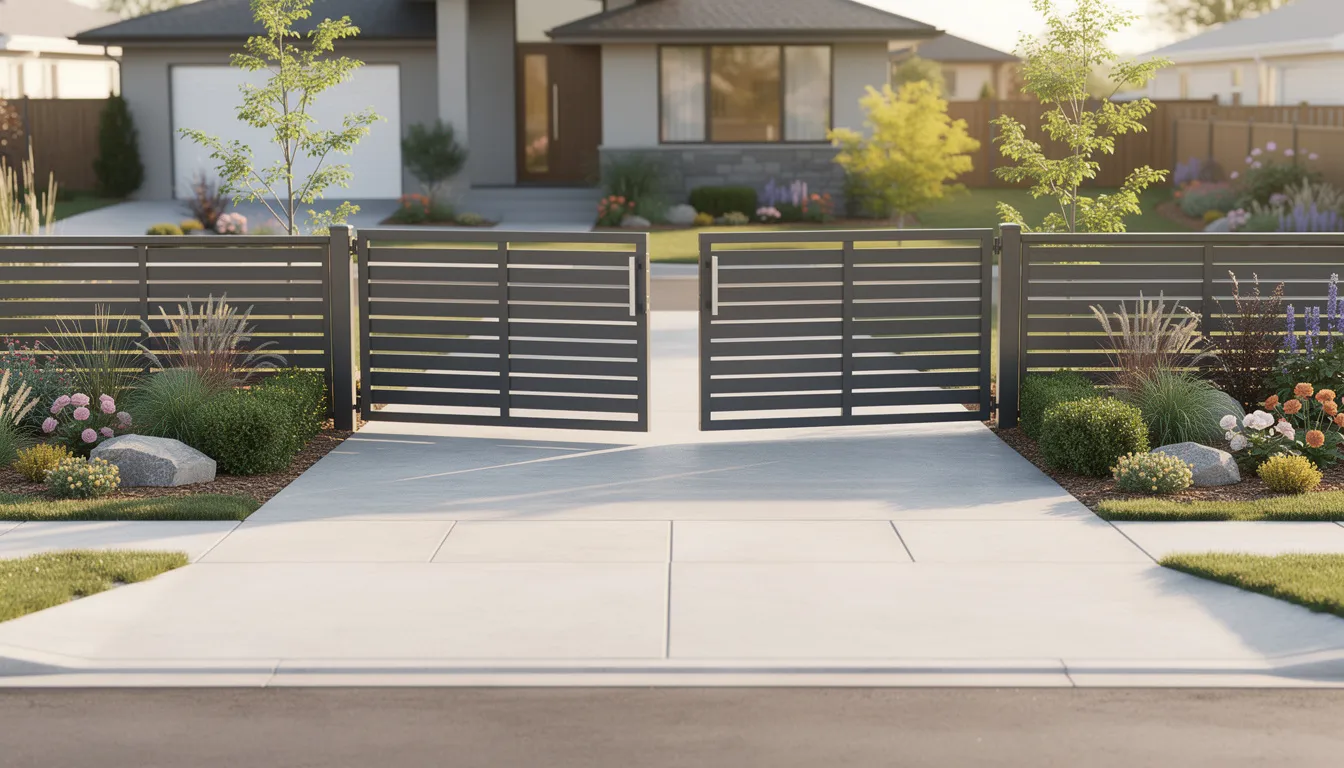
A common Wellington swing gate setup includes a single or double-leaf gate in aluminium or steel, motor arms on each leaf, safety photocells, and remote controls.
Typical cost range: $8,500–$13,000 installed on a moderate site. Double swing gate installations usually sit towards the upper end of the range due to the additional motor arm and control complexity.
Costs rise if the gates must open uphill or if the driveway gradient requires special hinges or custom posts. Swing gates may also need ground stops, magnetic locks, or extra safety edges, particularly on steeper sites or where small children use the driveway.
Swing gates work best for properties with enough flat apron space inside the boundary—common in many homes across Lower Hutt and Kapiti.
Premium Custom Electric Gate Systems
Premium systems feature architecturally designed gates, integrated keypad and video intercom, smartphone control, and often custom finishes or cladding to match your property’s style.
Cost range: $13,000–$25,000+ in Wellington for high-spec residential projects, especially on steep or technically challenging sites.
These projects often involve coordination with landscapers, builders, and sometimes structural engineers, increasing design and project management costs. Custom gates take longer to fabricate—expect 4–8 weeks for complex designs.
Premium features include:
- Laser-cut decorative patterns
- Cedar or composite timber cladding on steel frames
- Integrated LED lighting
- Connection to security or home automation systems
- Smartphone app control for remote monitoring
Example: A custom 4.5 m steel sliding gate with cedar infills, keypad entry, and Wi-Fi control on a steep Miramar site would typically cost around $18,000–$22,000.
Commercial and High-Usage Electric Gates
Car park entrances, apartment blocks, schools, and industrial sites around Seaview, Grenada, and Gracefield need heavy duty motors and robust steel security gate systems.
Indicative cost range: $20,000–$50,000+ depending on:
- Gate width and weight
- Automation type (cantilever sliding vs tracked)
- Access control (tag readers, keypad, licence plate recognition)
- Safety sensors and vehicle detection loops
Commercial gates often operate hundreds of times a day. A residential motor rated for 20 cycles daily won’t survive this punishment—industrial-grade motors, battery backup, and frequent servicing are essential.
Compliance with workplace safety standards adds to design and installation complexity. Commercial property owners should budget for an ongoing maintenance contract as part of the total cost of ownership. A fully automated pedestrian gate for staff access alongside the main vehicle gate adds another $2,500–$4,000 to the project.
Adding Automation to Existing Gates in Wellington
Many Wellington homeowners already have manual steel or aluminium driveway gates and want to retrofit automation as a cost-saving option. If your existing gate is structurally sound and correctly installed, this can be significantly cheaper than a full replacement.
Retrofitting automation to an existing gate that meets the criteria typically costs $5,000–$8,000, compared with $10,000–$15,000 for a complete new system.
However, older, twisted, or lightweight gates—including many wooden gates and timber gates—may need strengthening or complete replacement before motors can be added safely. Wellington’s wind, slopes, and coastal corrosion stress older gates in ways that aren’t always obvious.
A site visit is usually required to confirm suitability. An installer will check frame rigidity, post stability, roller or hinge condition, and track alignment.
When Your Existing Gate Can Be Automated
Characteristics of suitable gates include:
- Strong steel or aluminium frame with minimal flex
- Solid hinges or rollers in good condition
- Posts set in concrete to adequate depth (typically 600mm+)
- Reasonably straight track (for sliding gates)
- Clear running space and safe stopping points
Swing gates need solid hinge posts that don’t move under load. Sliding gates need a level track—any dips or humps cause motor strain.
If these conditions are met, adding a motor, control board, safety sensors, and remotes can start from around $5,000–$8,000 including professional installation.
Before committing to automation, check for rust or rot on coastal properties around Eastbourne, Seatoun, and Lyall Bay. Salt air accelerates corrosion, and what looks fine on the surface may be compromised underneath.
When Replacement Is More Cost-Effective
Tell-tale signs that replacement is wiser than retrofitting:
- Sagging or warped gate panels
- Undersized or wobbly posts
- Frequent manual jams or sticking
- Heavy corrosion or flaking galvanising
- Rotten timber rails or frames
Trying to automate structurally weak gates leads to repeated breakdowns, higher motor stress, and potential safety issues. The motor fights against a gate that doesn’t want to move smoothly, burning out faster and requiring more service visits.
In some cases, the combined cost of structural repairs, new rollers, new posts, and automation exceeds the price of a complete new gate system. Homeowners in windy ridgeline suburbs should consider replacing lightweight timber gates with stronger aluminium or steel before automating.
Replacement is an investment in long-term reliability and low maintenance, not just an upsell.
Hidden and Ongoing Costs of Electric Gates in Wellington
When budgeting for an electric gate project, several expenses are easy to overlook. Being aware of them upfront prevents unpleasant surprises.
Likely hidden costs:
- Site preparation and levelling
- Concrete pads, tracks, and drainage
- Retaining work on sloped sites
- Council constraints in heritage zones
- Extra electrical work beyond the gate motor
Ongoing costs:
- Servicing every 12–24 months
- Minor repairs (photocells, remotes, hinges)
- Electricity (minimal—comparable to a small appliance)
Site Preparation, Concrete, and Drainage
Many gates need new concrete pads for posts, tracks for sliding gates, or surface smoothing to prevent puddling at the gate line.
On sloping Wellington sites, installers may need to cut or build up the driveway to create a level surface for safe gate travel. This is common in suburbs like Ngaio, Hataitai, and Brooklyn where driveways often slope steeply from the street.
Extra drainage or channel grates may be required where water runs down steep driveways. Without proper drainage, water pools at the gate, causing track corrosion and freeze issues in winter.
Indicative civil works costs:
- Simple concrete pads: $300–$600
- Sliding gate track and levelling: $1,000–$2,500
- Extensive cutting, boxing, and concrete: $2,500–$4,000+
Investing in proper groundwork reduces future maintenance and avoids gates binding or scraping after heavy rain.
Electrical Work Beyond the Motor
Pricing for “gate automation” sometimes excludes the electrician’s work from the meter board to the gate, which can surprise homeowners.
In Wellington homes—especially older villas and bungalows—the switchboard may need upgrades, RCD protection, or additional circuits to power a gate safely. A 1920s cottage in Thorndon might need $1,500 in switchboard work before the gate power can even be connected.
Electrical work cost range:
- Simple new cabling (short run): $300–$600
- Moderate complexity: $800–$1,500
- Complex switchboard upgrades and long runs: $2,000–$4,000
NZ law requires a licensed electrician for all 230V work. Compliance certificates provide proof of safe installation and are essential for insurance purposes.
Ask for a quote that clearly separates gate hardware, civil works, and electrical costs so you can compare gate options accurately.
Maintenance, Repairs, and Running Costs
Electric gate motors in Wellington typically need servicing every 12–24 months depending on usage, exposure, and proximity to the sea.
A routine service involves:
- Checking motor torque and force settings
- Lubricating moving parts (rollers, hinges, tracks)
- Testing safety devices (photocells, safety edges)
- Adjusting gate alignment
- Cleaning debris from tracks and motors
Indicative costs:
- Standard residential service visit: $200–$400
- Parts and repairs: extra as needed
- Battery replacement (for backup systems): $100–$250
Electricity usage for an electric gate is modest—often just a few dollars per month. Power bills seldom change significantly.
Regular maintenance helps avoid bigger breakdowns, especially important in high-wind, coastal, or exposed hilltop locations. A $300 annual service beats a $1,500 motor replacement.
Choosing the Right Electric Gate Setup for Your Wellington Property
The “right” gate balances budget, security, convenience, and the realities of your specific site. There’s no one-size-fits-all answer—what works perfectly for a flat property in Whitby might be completely wrong for a steep site in Wadestown.
Weigh gate type, materials, automation level, and access control features based on how you use your driveway day-to-day. Consider:
- How often do you enter and exit?
- Will visitors need access (tradespeople, deliveries)?
- Do you have children or pets?
- What’s your curb appeal priority?
Engaging a local installer familiar with Wellington conditions can prevent costly mistakes, such as choosing the wrong gate for a steep or windy site.
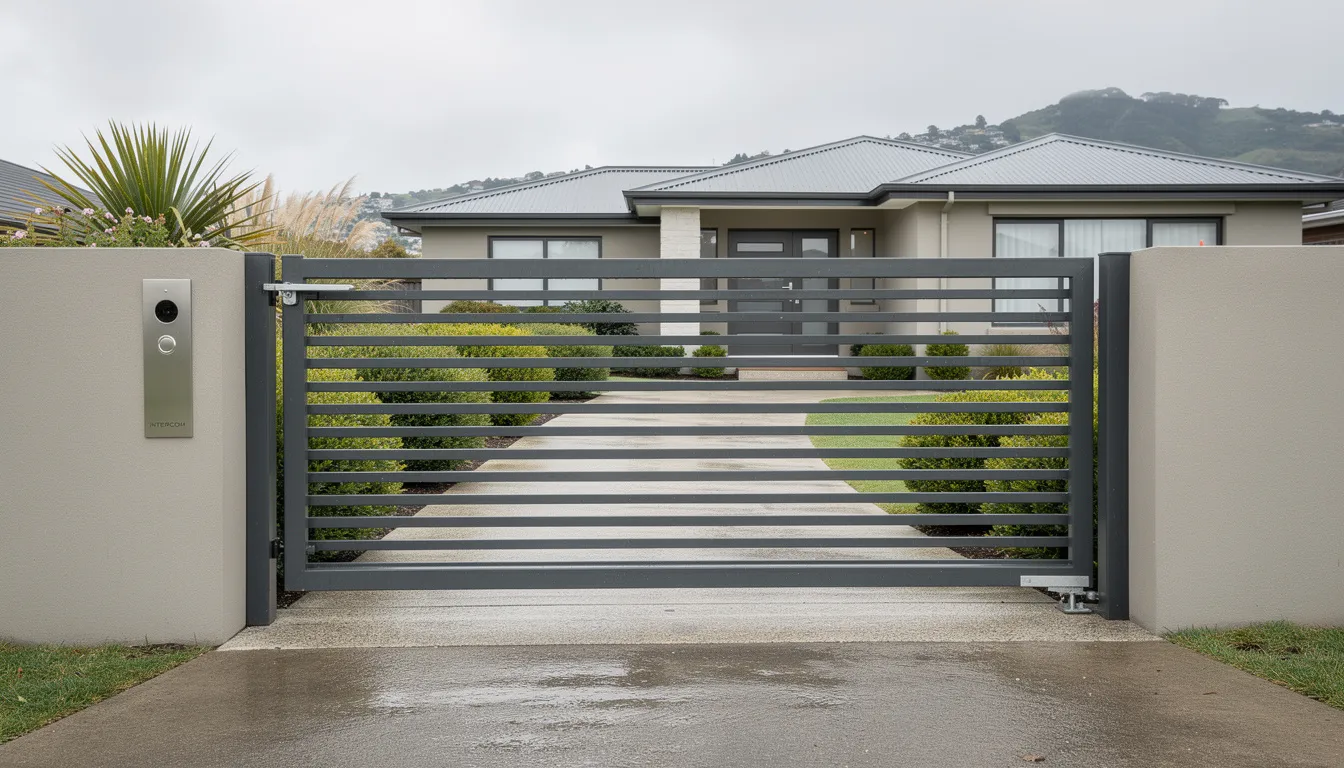
Matching Gate Type to Your Driveway Layout
Sliding gates are often best for short or steep driveways where swing gates would either hit the slope or obstruct footpaths and narrow streets. They’re ideal for small spaces where there isn’t room for gates to swing inward.
Swing gates suit longer, flatter driveways where a traditional look matters and there’s enough internal space. They work well when you have a generous apron inside the property boundary.
For shared or multi-dwelling driveways, consider sliding or cantilever gates designed for multiple daily cycles and wider access widths.
Before getting quotes, check:
- Vehicle turning circles
- Street clearance requirements
- Council rules for gates opening onto public footpaths
- Whether your gate line is on the boundary or set back
Sketch your driveway and gate opening direction as a practical step. This helps installers give accurate quotes without a site visit.
Choosing Materials for Wellington’s Climate
Powder-coated aluminium: Light, rust-resistant, and low maintenance. Popular for coastal suburbs like Seatoun and Eastbourne. Various styles available from simple slats to decorative patterns. Suits most residential properties.
Galvanised and painted steel: Stronger and heavier than aluminium. Suited to high-security gate or high-wind sites. Must be properly galvanised and painted to prevent rust—cut edges and scratches need touching up promptly.
Timber-clad metal frames: Combine the warmth of wood with the strength of steel or aluminium. Exposed timber needs regular staining or painting due to Wellington’s rain and UV. A steel frame with timber cladding balances appearance and durability.
Material selection affects not only upfront cost but long-term maintenance. A cheaper gate that needs repainting every two years may cost more over a decade than a quality aluminium gate that just needs washing.
Security, Safety, and Smart Features
Core security features:
- Robust locks integrated with the motor
- Anti-lift devices on sliding gates
- Integration with alarms or CCTV
- Solid construction that resists break ins
Essential safety features:
- Photocells to detect obstacles
- Safety edges that stop the gate if contact is made
- Appropriate motor force settings
- Emergency manual operation release for power failures
Smart features popular in 2026:
- Smartphone apps for remote control
- Keypad entry for kids (no remote needed)
- Temporary codes for tradespeople
- Video intercoms for deliveries
- Integration with home automation systems
Families with small children and pets should prioritise safe closing speeds, reliable sensors, and designs that prevent climbing or squeezing through gaps. Safety photocells typically add $200–$500 to the install but are essential.
These features are incremental cost add-ons—you can start with basic remote controls and add keypad entry or intercom later if needed.
Frequently Asked Questions About Electric Gates in Wellington
How much should I budget for a basic electric driveway gate in Wellington in 2026?
Most homeowners should plan for around $7,500–$10,000 for a basic automated sliding or swing gate on a straightforward, near-level driveway with reasonable power access. This budget usually covers the gate, motor, standard safety gear, and installation costs—but not extensive concrete work or long power trenching. Allow a contingency of 10–15% in case site conditions or electrical work turn out more complex than expected.
Is it cheaper to install manual gates now and automate them later?
Installing a manual gate “automation-ready” can save money initially, but only if the frame, posts, and hinges are designed from day one to take a motor. If budget is tight, you can start with a well-built manual gate and add motors within a few years. However, retrofitting automation to a gate not designed for it often costs more than installing a properly engineered electric gate from the start. Discuss DIY install versus professional installation options with your supplier.
Do I need Council consent for an electric gate in Wellington?
Most standard residential driveway gates don’t need building consent if they stay within typical fence and wall height rules (often up to 2–2.5 m). However, resource consent may be required if the gate affects vehicle visibility, encroaches on road reserve, or forms part of a larger retaining wall or structure. Check Wellington City Council or local Hutt/Porirua/Kapiti/Upper Hutt District Plan rules. Your gate installer should advise on any consents required—use their enquiry form or contact them directly by phone.
How long does it take to get an electric gate installed in Wellington?
A typical timeline runs 4–10 weeks from confirmed design and deposit to final commissioning. This breaks down into: site visit and quote (1 week), design sign-off (1–2 weeks), fabrication (often 3–6 weeks for custom gates), then 1–3 days on site for civil works, electrical connection, and motor installation. Bad weather—especially heavy rain and wind—can delay concrete work during winter months. Factor in lead times when planning a project for a new build or property sale.
Will Wellington’s wind damage my electric gate or increase costs?
Wellington’s strong winds are a key design consideration, particularly for solid, tall gates that catch the wind. Appropriate design—slatted infills, stronger posts, deeper foundations, and correctly sized motors—prevents wind damage but adds some upfront cost (typically $500–$2,000 extra for wind-rated engineering). If you’re on an exposed hilltop or ridgeline site, discuss wind loading explicitly with your installer. Cutting corners on wind resistance leads to premature wear, motor burnout, and property value reduction. A reliable, well-engineered gate protects both your property’s security and your investment.
Who provides electric gate installation services in Wellington?
Several reputable companies offer electric gate services in Wellington. Withington Electrical provides full-service electric gate installation, managing everything from site assessment to final installation. Gates Wellington specializes in designing and installing high-quality wooden, aluminium, and automatic gates across the region. Gateman offers a range of automatic gate solutions for both residential and commercial properties.
Are electric gates installed by qualified professionals?
Yes. All electric gates supplied by Withington Electrical are installed by a registered electrician to ensure compliance with New Zealand safety standards. Professional installation is strongly recommended due to the electrical work and structural precision required for safe and reliable operation.
What types of electric gates are available?
Electric gates come in various types based on their operation:
- Single Swing Gates: Open and close from one side, similar to a standard door.
- Double Swing Gates: Consist of two panels that swing open and meet in the middle.
- Single Sliding Gates: Move horizontally along a track to open and close.
- Double Sliding Gates: Have two panels that slide horizontally in opposite directions.
What materials are electric gates made from?
Electric gates can be constructed from several materials, including aluminium, steel, wood, and wrought iron. Aluminium gates are durable, rust-proof, and require minimal maintenance. Wooden gates are valued for their aesthetics but need more upkeep. Wrought iron gates are heavy-duty and often decorative but require regular maintenance to prevent corrosion.
How do electric gates enhance property security and safety?
Electric gates improve security by deterring unwanted intruders from entering your property. They also provide safety for children and pets by preventing them from wandering onto the road. Additionally, electric gates improve privacy by blocking views into your home and offer controlled access with advanced features like remote operation via smartphones.
Can electric gates improve my property’s curb appeal?
Absolutely. Electric gates can significantly enhance the curb appeal of your property, adding style and increasing resale value. Custom gates can be designed to complement your home’s architecture while providing durable, weather-resistant functionality.
What are the key steps in electric gate installation?
Installation begins with a comprehensive site assessment to measure and evaluate specific requirements and challenges. Custom-designed gates are then manufactured to meet your property’s needs. Professional installation ensures proper setup, safety compliance, and includes obtaining a Certificate of Compliance (COC), typically costing around $30 in New Zealand.
How much does electric gate installation cost in Wellington?
The cost varies depending on gate type, materials, site conditions, and features:
- Basic automated sliding gates generally start around $7,000 to $7,500, including gate, motor, keypad, and intercom.
- Simple swing gates typically cost around $2,000 for installation, with single swing gates ranging from $500 to $3,000.
- Sliding gate installation costs range from $500 to $3,000 for rear-pipe and V-track models, while cantilever sliding gates start at $1,000 and can go up to $4,000.
- The average cost to install an automatic electric gate ranges from $3,000 to $12,000, depending on complexity.
What are the ongoing maintenance costs for electric gates?
Annual maintenance usually costs between $100 and $300. Regular servicing ensures smooth operation, safety, and longevity of your electric gate system.
Can existing manual gates be automated?
Many existing steel or aluminium gates can be retrofitted with automation systems if they are structurally sound. Costs for adding automation typically start from around $5,000, including professional installation. However, older or lightweight timber gates may require replacement for safe automation.
What smart features are available with electric gates?
Modern electric gates can integrate smart technology, offering remote control via smartphone apps, keypad entry, video intercoms, and temporary access codes for visitors or tradespeople, enhancing convenience and security.
How do I choose the right electric gate for my property?
Consider your driveway layout, security needs, aesthetic preferences, and budget. Sliding gates are ideal for short or sloping driveways, while swing gates suit longer, flat driveways with ample space. Material selection should account for durability and maintenance requirements, especially in Wellington’s climate.
Where can I get expert maintenance and repairs for electric gates in Wellington?
Companies like Gates Wellington and Withington Electrical provide expert maintenance and repair services to keep your electric gates operating smoothly and efficiently. Gateman also offers reliable service with quick response times for both residential and commercial clients.
Conclusion
Investing in an electric gate in Wellington is a smart way to enhance your property’s security, safety, and curb appeal. While the electric gate cost Wellington can vary widely depending on site conditions, gate type, materials, and automation features, understanding these factors helps you make informed decisions that suit your budget and needs. Whether opting for a sliding gate ideal for sloping or small spaces, or a traditional swing gate for wider driveways, professional installation by a registered electrician ensures safety and compliance. With a range of customised solutions available—from basic automation for existing gates to high-end, architecturally designed systems—there’s an option for every residential or commercial property owner in the Wellington region. Don’t forget to consider ongoing maintenance and power access to keep your gate operating smoothly for years to come. Reach out to trusted local providers to get a tailored quote and enjoy the convenience, security, and style that an automated gate brings to your property.